
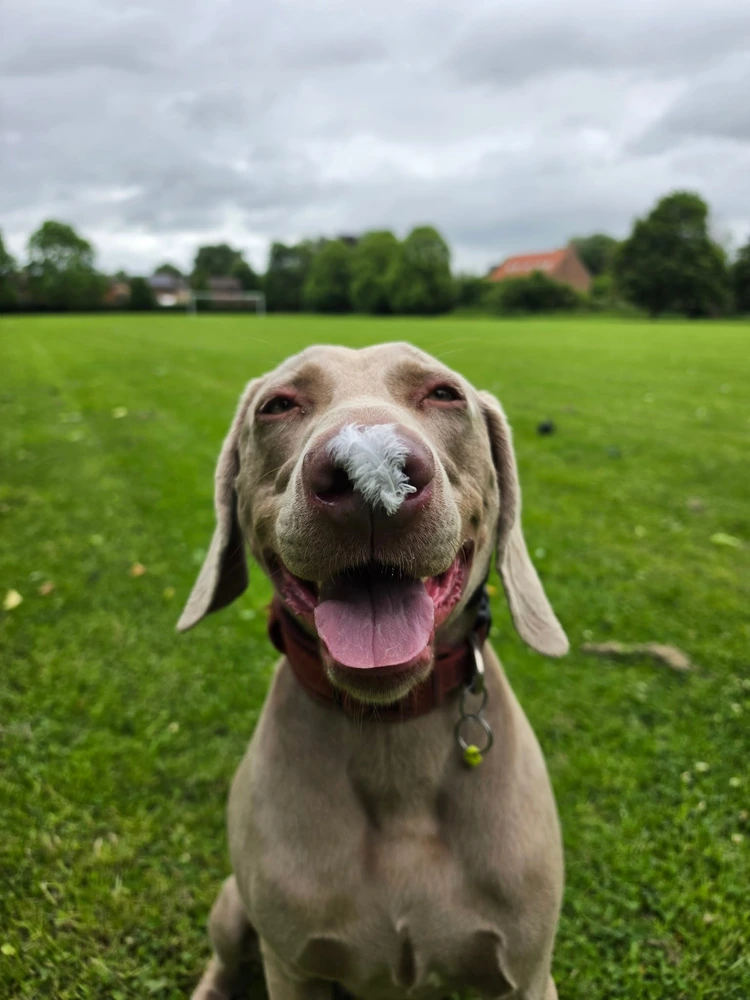
24E collar courseBaileyWeimaraner, aged three at assessment. Hunting drive and recall.
Bailey's assessment centred on giving his hunting instincts a safe outlet while making the handler's direction clearer.
Case stageE collar course
ProfileWeimaraner, aged three at assessment. Hunting drive and recall.
01 · The presenting picture
Bailey returned inconsistently when called and could remain occupied with scent or wildlife before responding. He pulled strongly at the start of walks and struggled to maintain positions.
The report described guarding of high value food items, alongside generally comfortable behaviour around other dogs.
02 · What the audit identified
The assessment considered hunting drive, inconsistent recall cues and limited structured engagement together. Reported digestive sensitivity also mattered when choosing rewards.
03 · The Canine UK strategy
- Use one clear vocabulary for recall, close walking, maintained positions and release.
- Build recall with physical backup before increasing freedom around wildlife.
- Provide structured scent and tracking activities.
- Manage valuable food items and practise short, rewarding sessions.
04 · E collar course
- The audit proposed foundation work and professional recall conditioning, with residential training discussed as an alternative.
- James confirms that Bailey attended an e collar course. No completed rehabilitation outcome is claimed.
05 · Owner transfer and maintenance
The owner plan emphasised consistent cues, daily practice, structured starts to walks and safe outlets for scent and hunting behaviour.