
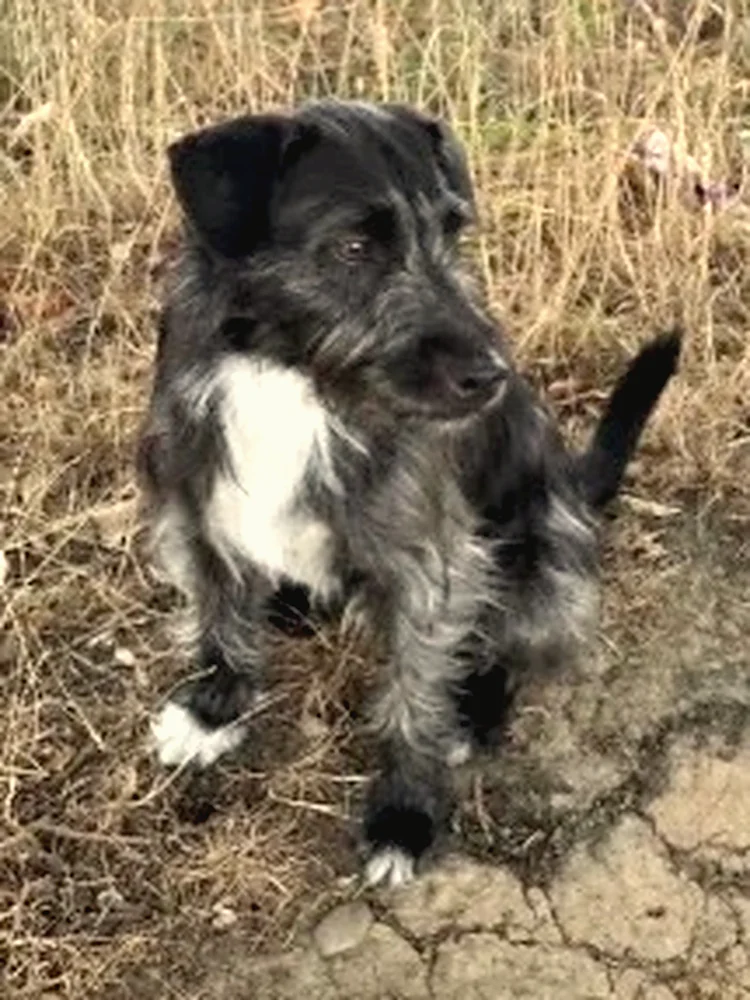
12Rehabilitation outcomeBlaze2-year-old Patterjack · completed independence and reactivity rehabilitation
Blaze was not dangerous. His world had become small because he did not believe he could cope without constant reassurance.
Case stageRehabilitation outcome
Profile2-year-old Patterjack · completed independence and reactivity rehabilitation
01 · The presenting picture
Blaze was found dumped with his mother and sister and joined his family at around 15 weeks. Over time he developed extreme dependence on his owners, panic around separation, indoor marking and very limited confidence around dogs.
He had previously been crate-trained, but this deteriorated after an incident involving three off-lead dogs. He had no bite history; the concern was panic, avoidance and an inability to regulate without human help.
02 · What the audit identified
Previous support had not created the independence or resilience he needed. Reassurance given with the best intentions could also become part of the pattern when it repeatedly removed every difficult experience.
The plan had to be realistic for a busy family while helping Blaze learn that discomfort did not automatically mean danger and that he could recover without being rescued from every situation.
03 · The Canine UK strategy
- Rebuild calm, progressive crate use and separation tolerance.
- Introduce clear household structure and predictable boundaries.
- Use controlled exposure around neutral dogs with appropriate safety measures.
- Develop recall, lead manners, play and impulse control.
- Teach independent settling rather than permanent reliance on human reassurance.
04 · Rehabilitation outcome
- Blaze completed his residential programme with improved lead manners, reduced fixation, lunging and barking, reliable recall and clearer core obedience.
- He worked successfully for multiple handlers across indoor and outdoor environments, developed greater impulse control and learned to coexist around neutral dogs in a controlled way.
- He returned home with rebuilt crate behaviour, clearer routines and a detailed plan for preserving independence, confidence and calm behaviour around dogs.
05 · Owner transfer and maintenance
The handover preserved structured crate use, daily recall and obedience practice, consistent household boundaries and advocacy around unfamiliar dogs. Improved coexistence was not presented as a reason to allow uncontrolled greetings.