
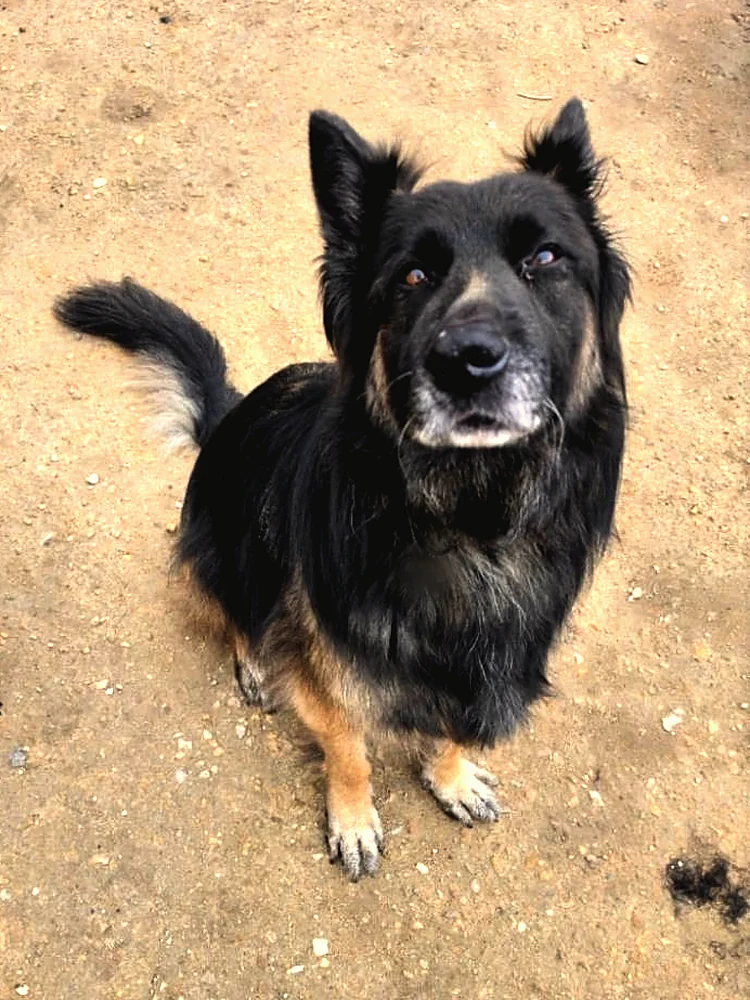
01Rehabilitation outcomeBram6-year-old German Shepherd · rescue background
Bram did not need chaos. He needed clarity, structure and safe exposure.
Case stageRehabilitation outcome
Profile6-year-old German Shepherd · rescue background
01 · The presenting picture
Bram had experienced multiple homes and long periods of confinement away from ordinary daily life. He arrived head-shy, environmentally unsure and reactive towards people, dogs and movement.
His behaviour was defensive and easily triggered. Safety, predictable handling and careful management of pressure therefore had to come before expectations of conventional obedience.
02 · What the audit identified
The audit indicated that Bram was not simply being disobedient. His behaviour had been shaped by instability, poor confidence, defensive coping strategies and a lack of clear, consistent communication.
Uncontrolled exposure risked confirming his concerns. The immediate priority was to reduce chaos and give him enough safety and clarity to process the environment without becoming overwhelmed.
03 · The Canine UK strategy
- Introduce and maintain a safely fitted muzzle without removing Bram's opportunity to learn.
- Use calm lead handling and structured movement to reduce conflict and arousal.
- Replace uncontrolled socialisation with carefully managed walks around neutral dogs.
- Build environmental exposure progressively, allowing confidence and recovery to develop.
- Give the owner clear expectations around management, routine and long-term consistency.
04 · Observed progress
- Bram began showing calmer body language and improved engagement with the handler.
- He developed a greater ability to exist around neutral dogs and real-world movement without continually escalating.
- The change was built through risk-aware exposure, clearer communication and repeatable routines rather than pressure or guesswork.
05 · Owner transfer and maintenance
The owner pathway centred on preserving the same communication and management at home, maintaining muzzle confidence and continuing controlled exposure at a pace Bram could process.