
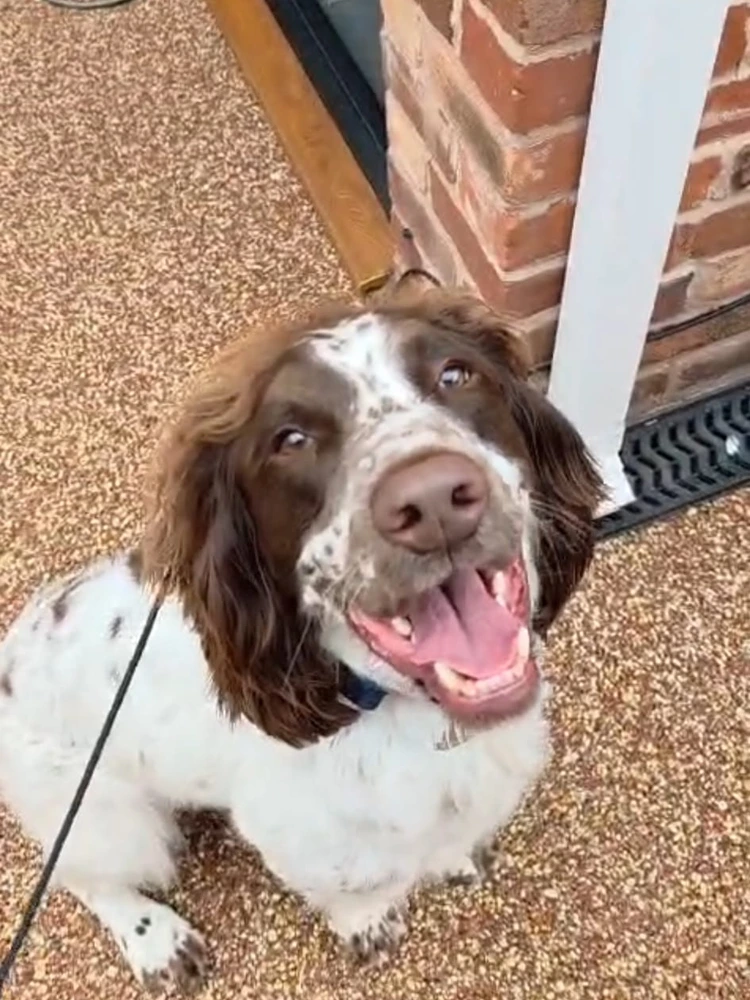
19Behavioural AuditBrynn5-year-old Sprocker Spaniel · chronic vigilance and dependency
Brynn was physically settled at times but rarely truly switched off from monitoring people, sounds and the environment.
Case stageBehavioural Audit
Profile5-year-old Sprocker Spaniel · chronic vigilance and dependency
01 · The presenting picture
Brynn showed persistent whining, fence running, environmental scanning, difficulty settling independently and heavy emotional reliance on his owners.
He lived with another dog whose guarding of a person added social pressure. Although he received walks and enrichment, the pattern suggested a mentally busy dog without enough regulation or breed-appropriate fulfilment.
02 · What the audit identified
The assessment separated quietness from calmness. A dog can stop vocalising in kennels because of shutdown as well as confidence, so previous silence away from home was not accepted as proof that separation was resolved.
The household pattern, limited deep rest and competition around people were all likely to maintain vigilance and dependency.
03 · The Canine UK strategy
- Create predictable rest and independence rather than allowing continual monitoring of owners.
- Add purposeful spaniel work and controlled scent-based fulfilment.
- Manage competition and guarding pressure between household dogs.
- Test short separation in a controlled setting before making a larger programme recommendation.
- Develop owner timing around reassurance, vocalisation and calm behaviour.
04 · Recommended pathway
- A short boarding assessment was recommended to observe crate behaviour and separation away from the household pattern.
- One-to-one and residential options could then be selected using evidence from that trial rather than assumptions.
- The central objective was not to silence Brynn, but to develop genuine regulation and independent rest.
05 · Owner transfer and maintenance
Both the human routine and the relationship between the dogs needed consistent management. Progress would depend on rewarding calm independence as deliberately as active training.