
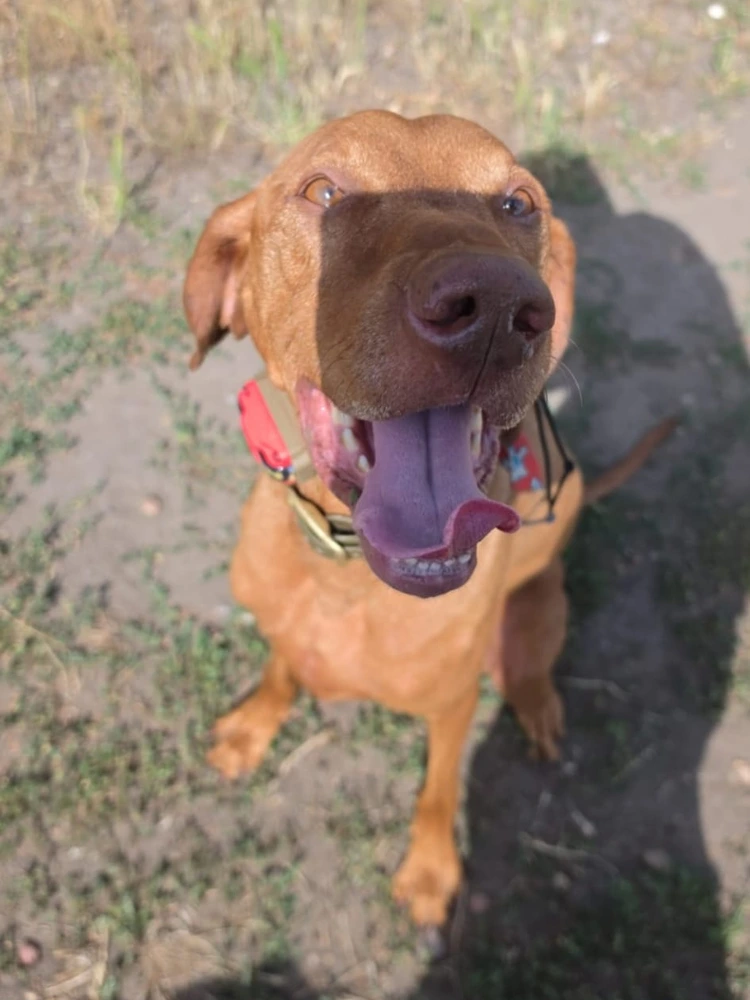
10Rehabilitation outcomeDenzelVizsla · over-socialisation, over-friendly greetings and impulse control
Being friendly with dogs is not the same as being able to pass them calmly without expecting access.
Case stageRehabilitation outcome
ProfileVizsla · over-socialisation, over-friendly greetings and impulse control
01 · The presenting picture
Denzel was not primarily intolerant of dogs. Early over-socialisation had created an over-friendly dog who expected access and became highly excited around other dogs.
That expectation affected lead manners, recall, impulse control and his ability to remain available to the handler around social opportunity and everyday movement.
02 · What the audit identified
Social confidence had not produced neutrality. Repeated access and greetings had reinforced the idea that seeing another dog should lead to interaction.
Denzel needed consistent markers, release cues and repeated practice around dogs without being allowed to greet automatically.
03 · The Canine UK strategy
- Develop loose-lead walking, recall, close work and core obedience.
- Build impulse control and handler engagement around dogs, people and everyday movement.
- Practise pass-by neutrality and calm coexistence without automatic greetings.
- Use multiple handlers and varied environments to generalise responses.
- Transfer a clear routine for rest, resources and maintenance work at home.
04 · Rehabilitation outcome
- Denzel's completed handover recorded improved lead manners, recall, crate entry, obedience and marker understanding.
- He became better able to work around dogs without pulling towards them or treating every encounter as an invitation to interact.
- He returned with a defined plan for preserving neutrality, impulse control and a calmer relationship with social opportunity.
05 · Owner transfer and maintenance
The handover required daily practice, consistent command language, structured rest and an end to automatic dog greetings so over-friendly behaviour was not continually rehearsed.