
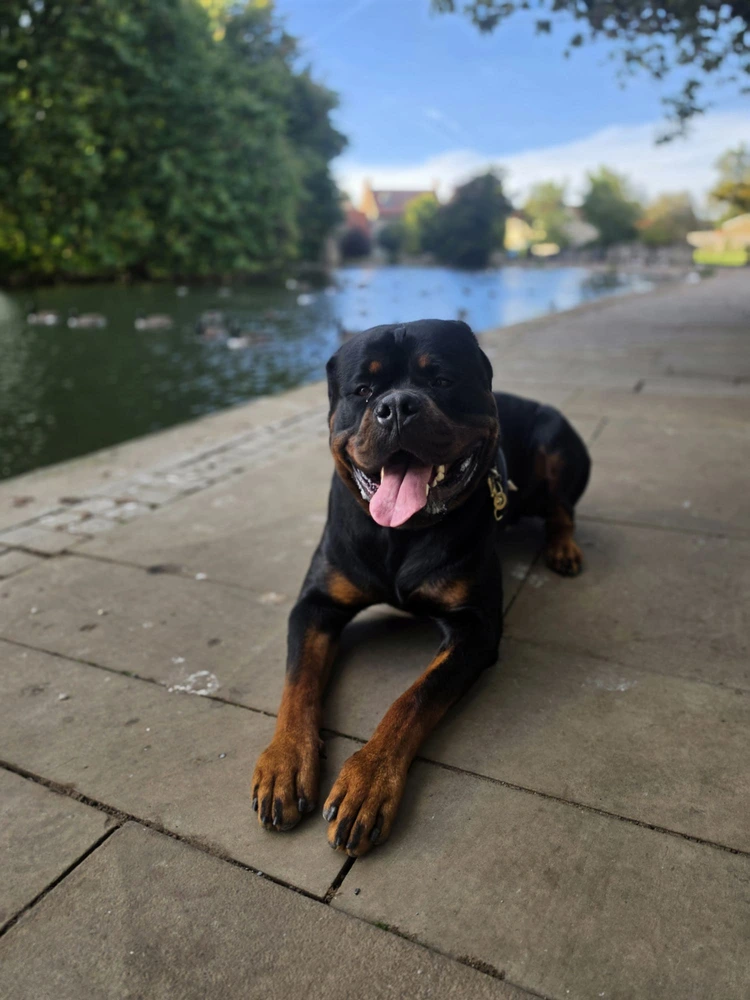
26Active trainingJaxRottweiler, aged nine months at assessment. Dog fixation and engagement.
Jax showed strong capacity to engage, but needed that attention to remain available when other dogs entered the picture.
Case stageActive training
ProfileRottweiler, aged nine months at assessment. Dog fixation and engagement.
01 · The presenting picture
Dog reactivity and fixation had been present from early development. Earlier protection work had stopped as those concerns emerged.
The assessment recorded good eye contact alongside incomplete structured training and a history of becoming accustomed to sustained equipment pressure.
02 · What the audit identified
The proposed pathway combined clearer communication, appropriate outlets for drive and controlled exposure. Brief previous use of an e collar did not amount to completed conditioning.
03 · The Canine UK strategy
- Build engagement through short, structured play and marker work.
- Develop recall and understood foundations before increasing freedom.
- Manage distance from dogs and prevent uncontrolled encounters.
- Teach owners to recognise rising arousal and reduce difficulty before escalation.
04 · Current stage
- A professional conditioning course was proposed alongside engagement and threshold homework.
- James confirms that Jax is in active training. The course is not presented as complete and no resolved reactivity is claimed.
05 · Owner transfer and maintenance
The owners' role was to practise consistently, keep exposures manageable and carry the same command and reward language into daily handling.