
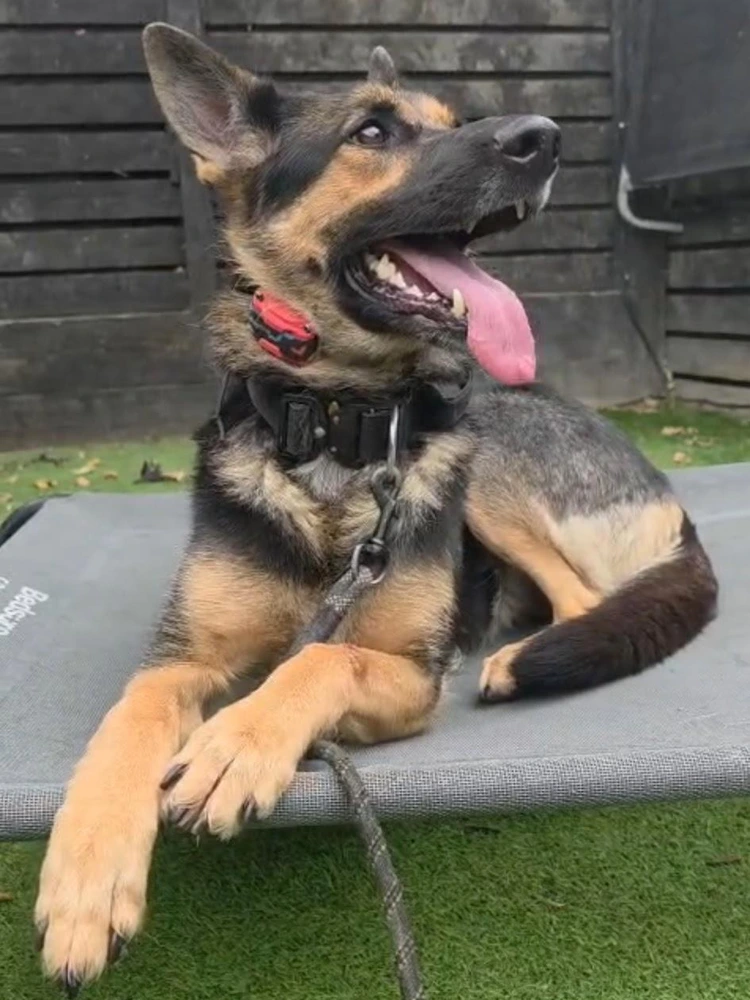
16Behavioural AuditNala5-year-old working-line German Shepherd | Dog Reactivity
Nala had previously responded well to professional training, but improvements had not been consistently maintained in everyday life.
Case stageBehavioural Audit
Profile5-year-old working-line German Shepherd | Dog Reactivity
01 · The presenting picture
Nala displayed established dog reactivity, including intense fixation, raised hackles and lunging. Her arousal escalated quickly, making her difficult to manage around other dogs.
Previous residential and extended training had produced inconsistent results at home. Nala also demonstrated significant prey drive, strong ball motivation and incomplete e-collar conditioning.
Despite no recorded bite history, the intensity of her reactions presented a potential risk.
02 · What the audit identified
The audit identified a predictable sequence: visual fixation, increasing tension, heightened arousal and eventual reaction.
Recognising these early indicators provided opportunities to intervene before escalation.
Controlled introductions, using appropriate muzzle safety and professional handling, demonstrated that Nala could progress from an initial reactive response towards calmer investigation and tolerance.
03 · The Canine UK strategy
- Rebuild lead communication, heel work and handler responsiveness.
- Strengthen recall through structured long-line training.
- Manage prey drive and ball fixation through controlled access and purposeful play.
- Establish consistent place, crate and rest routines.
- Develop neutrality around other dogs through controlled exposure.
- Improve owner handling skills and consistency.
04 · Recommended pathway
An extended residential programme was recommended to address Nala’s established behaviour, followed by structured owner instruction.
One-to-one training remained an alternative, requiring greater owner involvement and ongoing consistency.
The objective was reliable handling, improved tolerance and safer everyday encounters, rather than forced social interaction.
05 · Owner handling and maintenance
Recommendations focused on clearer communication, consistent routines, recognising early fixation and intervening before escalation.
Long-term progress would depend on the owners confidently applying these skills in everyday environments.