
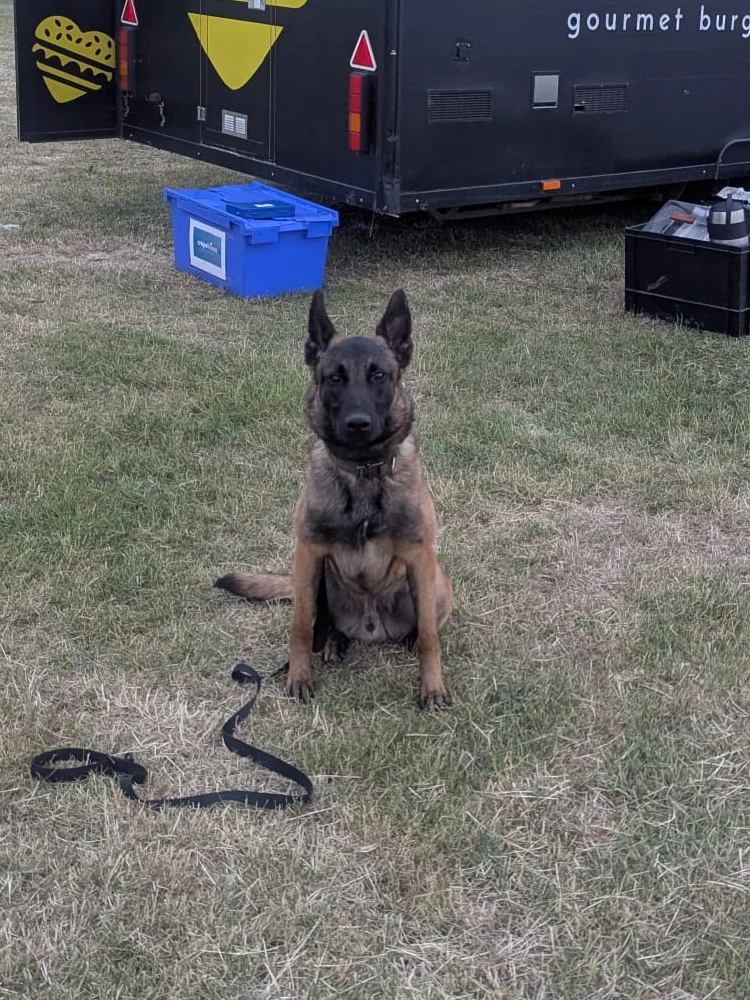
04Rehabilitation outcomeVinnieMalinois-type rescue · council-kennel rehabilitation and working placement
Some dogs are not broken. They are misunderstood, unmanaged and under-directed.
Case stageRehabilitation outcome
ProfileMalinois-type rescue · council-kennel rehabilitation and working placement
01 · The presenting picture
Vinnie came into rehabilitation from council kennels as a highly driven working-type dog whose energy, frustration and lack of direction had become destructive and difficult to manage.
His future depended on understanding whether that intensity could be channelled safely and purposefully, rather than treating drive alone as a reason to write him off.
02 · What the audit identified
Vinnie did not need to be shut down. He needed decompression, predictable handling, clear boundaries and suitable outlets for the drive he already possessed.
The case required the team to understand the individual dog rather than reducing him to a label such as difficult or beyond help.
03 · The Canine UK strategy
- Use initial decompression and a stable routine to reduce chaos.
- Introduce clear handling and prevent further rehearsal of destructive patterns.
- Channel drive through structured play, engagement and purposeful work.
- Build handler focus and response to direction without attempting to remove the dog's natural intensity.
- Assess the kind of experienced, purposeful long-term placement in which he could genuinely succeed.
04 · Observed progress
- As the routine became clearer, Vinnie showed the dog underneath the chaos: engaged, playful, trainable and capable of working with the handler.
- His intensity became something that could be channelled rather than continually fought.
- Following rehabilitation, Vinnie was successfully rehomed into a working role suited to those traits.
05 · Owner transfer and maintenance
The placement and handover needed to preserve meaningful outlets, experienced handling, controlled access to resources and a predictable rhythm of work and rest.