The key point
You do not need perfect notes or a video. An accurate account of everyday life is a useful starting point.
You do not need a perfect diary or a video of your dog’s most difficult moment to prepare for a Behavioural Audit. A few clear notes about everyday life can help us understand what you are experiencing and what you need support with.
At Canine UK, our principle is audit before assumptions. Your observations help us consider the individual dog, the people caring for them and the situations in which behaviour occurs.
Start with the problem you want help with
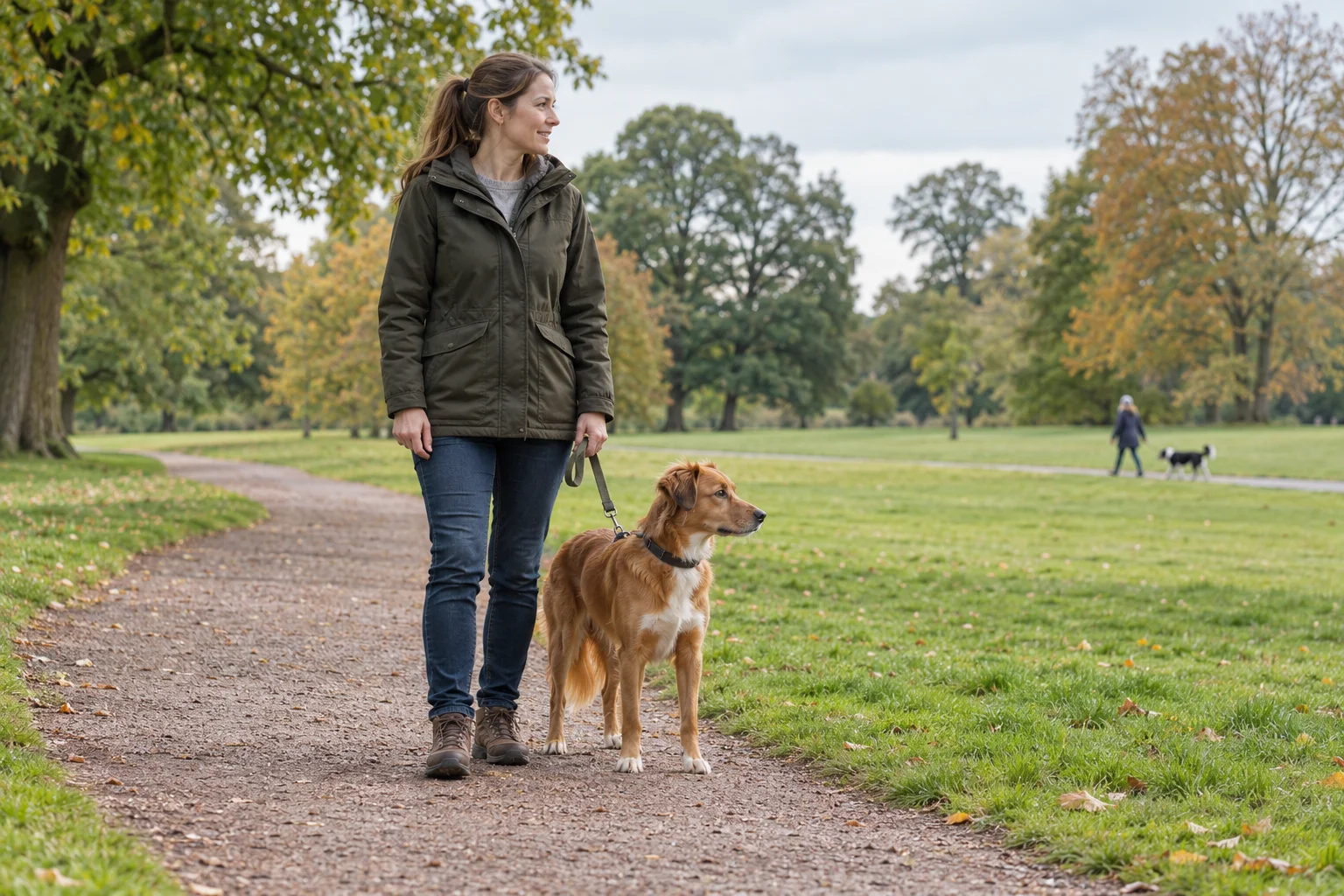
Describe what your dog actually does. “Barks and pulls towards dogs on narrow paths” gives us more to work with than “bad on walks”.
Note when you first noticed the behaviour, whether it has changed and roughly how often it happens. Include what you would like to become easier, such as walking past other dogs with enough space or managing visitors safely.
You do not need to work out the cause yourself. That is something to explore through your Behavioural Audit.
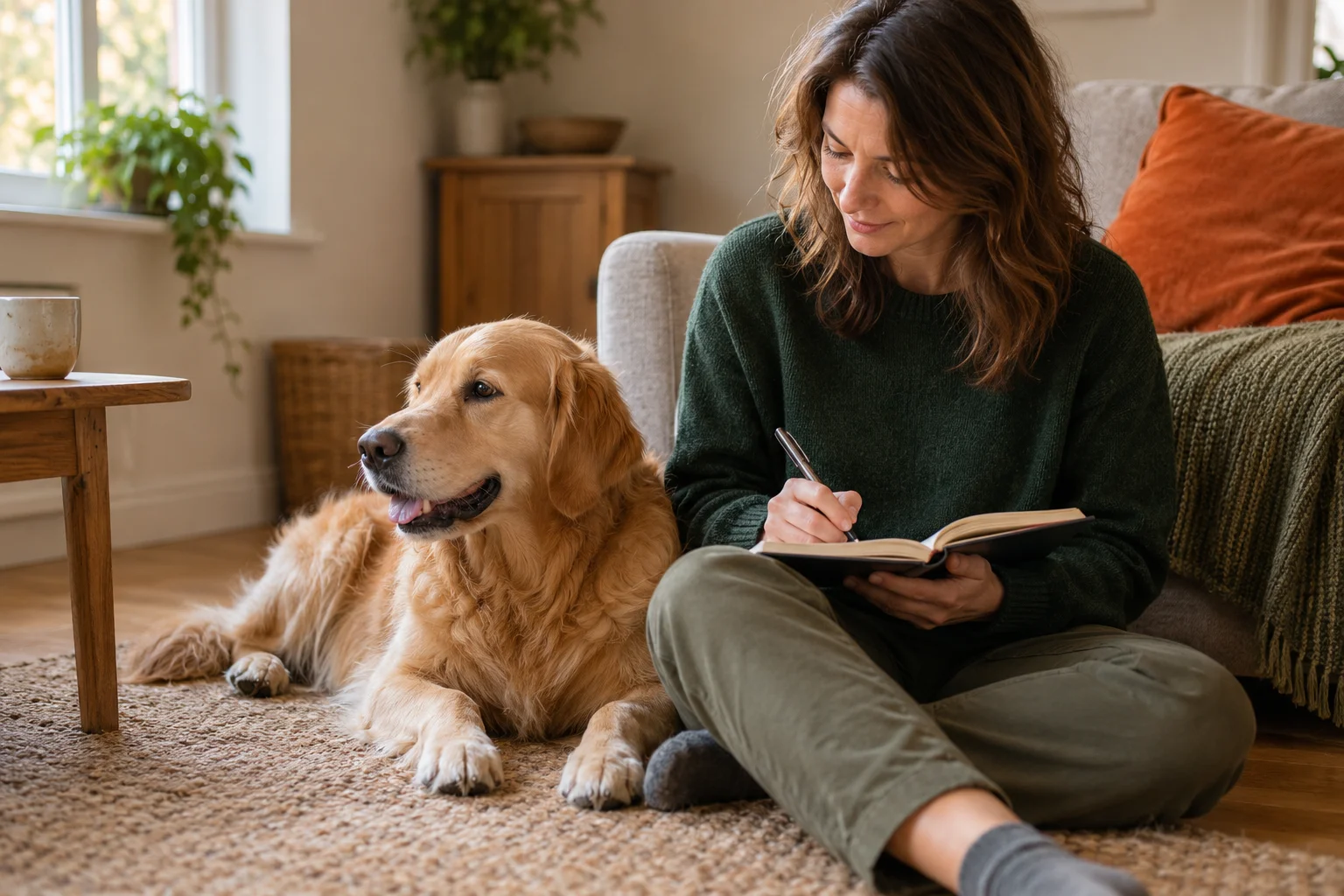
Use a simple observation record
For an ordinary situation that has already happened, jot down:
- Before: Where were you, what was happening and who or what was nearby? Estimate distance if relevant, without moving closer to measure it.
- During: What did your dog do? Describe visible actions, such as stopping, staring, moving away, barking or pulling.
- Your response: What did you do, and what changed in the situation?
- After: What happened next? Note approximately how long it took your dog to return to their usual activity, if you could observe this safely.
For example: “At the park entrance, a dog appeared across the path. Mine stopped, stared and then barked. I moved away into an open area. After a few minutes, my dog began sniffing again.”
This is an illustrative note, not a client case or a diagnosis. Include easier moments too. Knowing that a dog passed at a greater distance without a reaction may be useful context.
Add the wider picture
Make a short note of your dog’s usual rest, exercise, play and home routine. Mention recent changes, relevant veterinary history, medication and any concerns about comfort, movement or handling.
Health matters alongside behaviour. Canine UK considers the whole dog, and training does not replace veterinary care.
Tell us what training or management you have already tried, what helped and what was difficult to maintain. Include practical limits, such as who walks the dog, the space available and the time you can realistically commit. These details help us recommend something workable.
Keep recording safe and proportionate
Do not recreate an incident, approach another dog, remove food or invite someone closer to see what happens. Observation should never create another opportunity for a bite or distress.
Written notes are enough. Do not divide your attention between filming and safely handling your dog. If you already have a relevant clip, ask the team whether and how to share it privately. Avoid identifying other people, children, addresses or neighbouring homes.
Tell the team about risk before you arrive
Tell us in advance about any bite or attempted bite, difficulty with handling, or concern about safely attending. Do not wait until the appointment to mention it. This allows the team to discuss appropriate arrangements with you.
Bring the information you have. You do not need to delay asking for help until you have collected several days of observations.
Your preparation checklist: your main concern, one useful observation, relevant health and training history, known risks and a realistic goal.