Look at the whole situation.
Notice changes in your dog, the activity, the space and the people involved. A familiar dog still needs room around food, sleep and toys.

KNOWLEDGE. AWARENESS. SAFER CHOICES.
Helping children, families and professionals recognise risk, build safer habits and get the right support.
Practical help for families. Free resources. No email required.
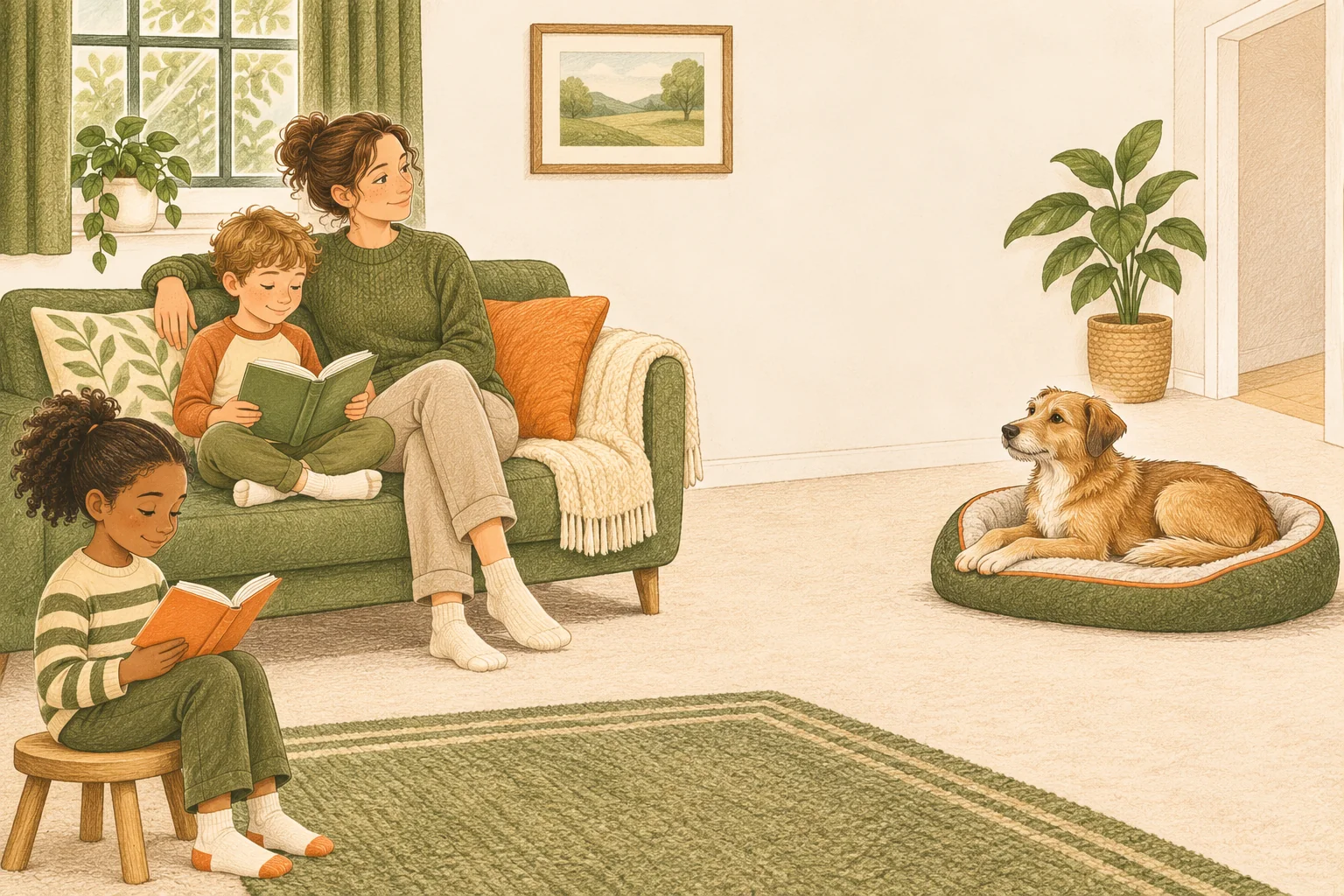
FIND YOUR STARTING POINT
Start with the people and situations that matter to you. Understanding helps, but adults remain responsible for managing risk.
Real photographs, everyday boundaries, warning signs and lessons from documented bite incidents.
Explore adult resources 02 / FOR CHILDREN & GROWN UPSFriendly pictures, stories and simple conversations about giving dogs the space they need.
Explore children’s resources 03 / FOR SCHOOLS & GROUPSExplore education for your setting, with the age, understanding and needs of your group in mind.
Explore educationYOUR FIRST PRACTICAL STEP
Learning the signs matters. Making the situation safer is the adult's job.
Notice changes in your dog, the activity, the space and the people involved. A familiar dog still needs room around food, sleep and toys.
Choose an adult who is actively watching and able to act. If that is not possible, use secure separation and a protected place where the dog can rest.
Growling, snapping, guarding or a near miss needs an individual plan. Keep children securely separated from the dog and enquire about a Behavioural Audit.
Keep the full guidance handy. Find the family guide in Owner Resources, or use the adult photo guide to discuss everyday boundaries.
LITTLE WORDS. IMPORTANT HABITS.
Four friendly reminders to read with a grown up. Practise with pictures or toys, without bothering a real dog.
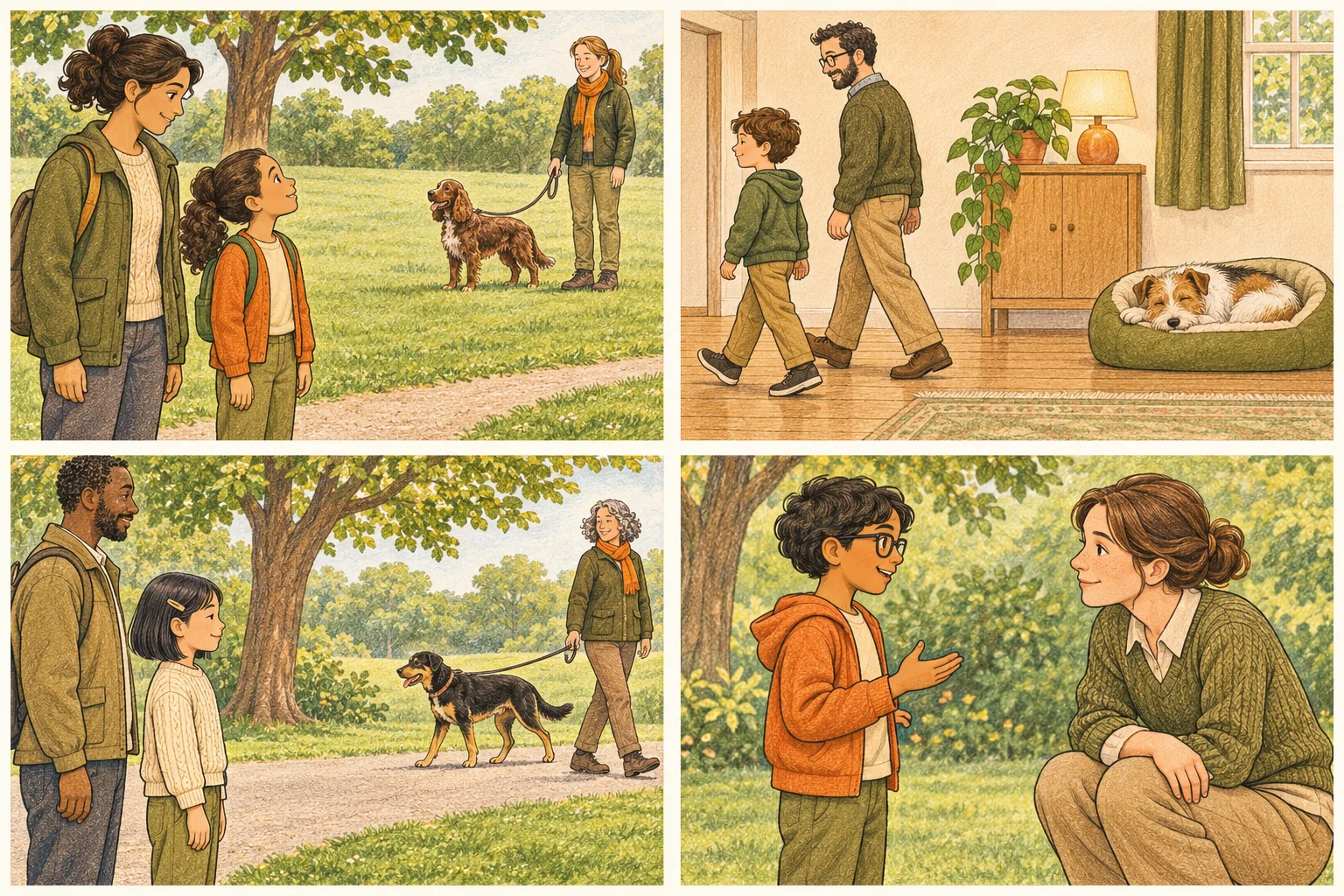
Ask your grown up and the dog’s grown up before going closer. Let the dog choose to come over.
Leave sleeping and eating dogs alone. Beds, food and toys are dog space.
Keep hands close and movements quiet. Do not run up, hug, chase or follow a dog that moves away.
Tell an adult if a dog scares, growls, snaps or hurts you. Never keep a bite a secret.
Grown ups keep children safe. These reminders support learning. They do not replace active supervision or secure separation.
TRY A CONVERSATION
Leave it and tell a grown up. Do not grab the toy or reach towards the dog’s mouth.
Try more questions in the guideKEEP LEARNING IN RESOURCES
The full books live in our resource library, ready to read together or revisit after a session.
TAKE THE LEARNING FURTHER
Explore our school, community and parent sessions in Canine UK Education, including age groups, workshop topics and what to expect.
Explore talks & workshopsCONCERNED ABOUT YOUR OWN DOG?
Growling, snapping, guarding or a near miss around a child needs an individual plan.
Keep secure separation where there has been threatening behaviour, a bite or a near miss involving a child. A Canine UK Behavioural Audit is the starting point for understanding your dog, your family and the risks.
Enquire about a Behavioural AuditChildren must never be used to test a dog or practise a risky exercise.
WHEN SOMETHING HAS HAPPENED
Use the guide’s incident response and bite care sections. An immediate threat or serious injury needs emergency help, not an enquiry form.
This is an emergency safety response, not a dog training exercise.